Terence from Chicks with Candles has tagged me to “list
ten films that describe my aesthetic.” I believe this is a Tumblr game that has
leaked into Blogger in my case. Before me, Terence was tagged by @alfredsnightmare. So what does it mean to say “my aesthetic”? With movies, I
think of it as a familiar visual and emotional theme that still resonates with
me irregardless of how many times I experience it.
But perhaps the included images
might speak a little more than words.
1)
The Forbidden Photos of a Lady above Suspicion (1973): Colorful liquor bar carts, ‘70s giallo
glamor, Euro-nightclubs, Technicolor, small cars, cigarettes, Edda Dell’Orso,
Ennio Morricone – So these features could describe a lot of movies, but
this one has one of my favorite titles and Nieves
Navarro in a black high split open side dress. I thought that Navarro’s proud and confident sexually liberated
character Dominique felt like a proto-Samantha from Sex and the City.
2) Succubus (1968): Provocative muses, looming castle destinations,
mannequins, inner personality conflicts, nightclub faux torture scenes, dream
sequences, trippy acid parties – The hazy soft-focused sequence when Janine Reynaud’s Lorna Green drifts out of bed
and ventures to the limestone river castle in Lisbon and the questionable perspective
of dream or reality remains a gold standard for surreal film experiences for
me. Is she mad, or just not of this world?
3)
The Reincarnation of Isabel (1973): Erotic
madness, mountainous terrain, spaced out looking actors standing around the
Castle Balsorano, Eastmancolor, expressive sadomasochism, comical sex scenes, day
and night merging, excessive use of grandiose set pieces – This movie’s
a chaotic mess, but it’s also an expressionistic masterpiece that thrives on
account of its aesthetic and not its narrative.
4) The Blood Spattered Bride (1972): Ancestral mansions, sapphic vampires, Carmilla influenced, bloody daggers,
blurred line between dream and reality, bloody mariticide, gothic candle lit
dinner scenes, sylvan settings – Beautiful but disturbing with several
uncomfortable parts, The Blood spattered
Bride still works as a great Spanish horror film despite being pretty heavy
with its tones of misogyny and misandry.
5)
The Spider Labyrinth (1988): Conspiracy
theory – How can conspiracy theory be an aesthetic? Well, have a look at
the included screen grab below. That realization that you were in the lion’s
den the entire time makes for a uneasy experience in denouements to films such
as The Perfume of the Lady in Black,
Short Night of Glass Dolls, and Rosemary’s Baby.
6) Pinocchio and the Emperor of the Night (1987): ‘80s Filmation nostalgia, inappropriately scary
for intended kid audience, creepy carnivals – This unofficial sequel to Carlo Collodi’s Pinocchio did give me nightmares, particularly on account of one
scene with Pinocchio at The Neon Cabaret, some sort of kid disco (the Playland counterpart),
where the kids' faces start to horrifically distort after he drinks the sparkly
green liquid, which I like to think is carbonated Ecto Cooler spiked with absinthe.
7) All the Colors of the
Dark (1972): Black Masses, Edwige
fenech (yes, she counts as an aesthetic), looming mansion destinations, Bruno
Nicolai, staying classy and fashionable (like something out of a JCPenny’s
catalogue) while being stalked by your killer. I love black mass scenes and
All the Colors of the Dark easily
has my favorites.
8) The Werewolf vs.
the Vampire Woman (1971): Vampires
moving through space in slow motion, classic monster mashups, Paul Naschy, gothic ambiance
– With the right amount of fog and dread, slow motion framing can make your
monsters seem to exist outside of space and time, and the effect is quite
startling, so much so that Amando di
Ossorio would mimic it for his Blind Dead Templars.
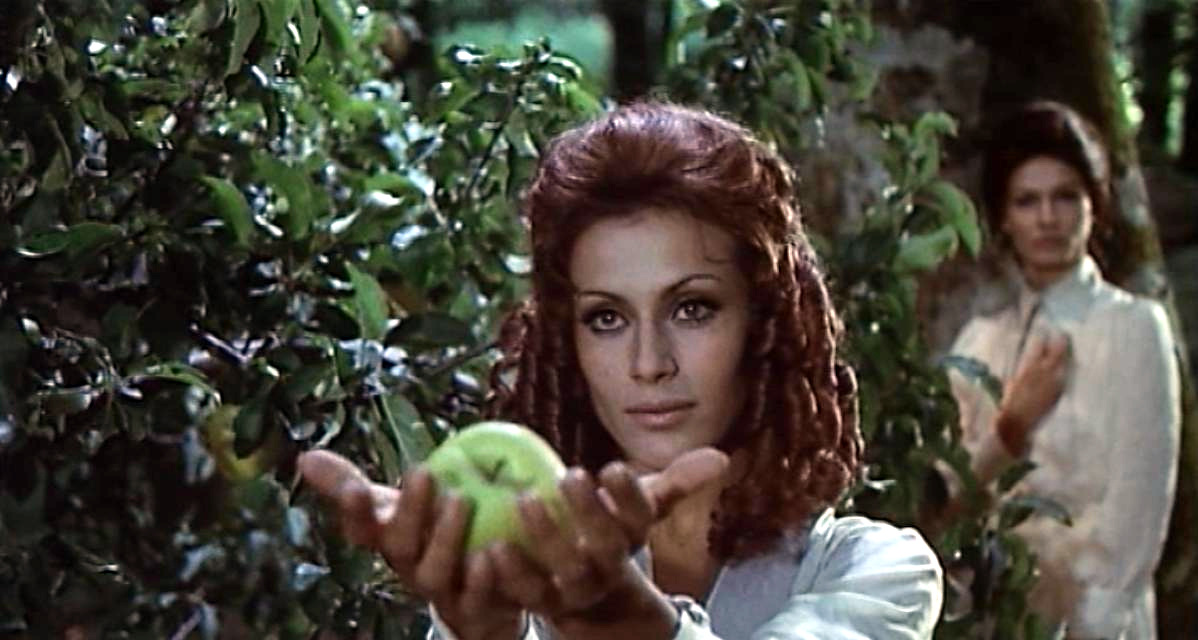
9) Queens of Evil (1970): Horror movies with a fairytale exterior, provocative situations that
aren’t what they seem, ancient witches in touch with modern ‘70s fashions, Snow
White, free spirited hippies with a lot of crazy ideas about free love – Queens of Evil is a fantastic horror
film with a biting social message.
10) Who Framed Roger Rabbit (1988):
Classic cel animation juxtaposed with
reality, nourish style set in 1940s LA, inappropriate for kids despite
being one of my favorite movies as a kid – There couldn’t be anything more
awesome than cartoons being real and the existence of a place like Toontown and
not to mention a chance to meet Betty Boop.
Sunday, May 8, 2016
Ten Films That Describe My Aesthetic
Labels:
Betty Boop,
Cartoons,
Edwige Fenech,
Eurocult,
Film Aesthetic,
Filmation,
Lists,
Nieves Navarro
Friday, April 1, 2016
Adrift / Touha zvaná Anada (1971)
Adrift
was
one of the last, if not the last, Czechoslovak New Wave films before the Soviet invasion of Czechoslovakia in 1968. Filming was actually interrupted by the invasion, with a
military bridge being temporarily erected at the filming site on the banks of the
Danube River. Adrift’s co-director
and co-writer (academy award winning filmmaker Ján Kadár) then fled the country and made another film in the US, The Angel Levine. After the loosening
of Soviet control in Czechoslovakia in 1969, Kadár returned, and, after getting everyone back together, filming
for Adrift resumed.
I became interested in Adrift (or my preferred title: A Desire Called Anada) at random while scanning for new older foreign films to watch. One drew me in by its poster design (I know, typical) that put me in the mood for a haunting, surreal fantasy about a water nymph. I also saw that it was Czechoslovak, which had me recalling At the Mansion of Madness favorites Valerie and Her Week of Wonders (1970) and Morgiana (1972). I’ve also been meaning to explore more Czechoslovak New Wave films, especially for this site, so I kind of committed myself to Adrift for review before even watching it. I decided not to read anything about it and go in fresh without knowing what it was about or if it was any good. (Yep, that’s how this blogger sometimes picks movies). Spoiler: it’s good.
Monday, February 22, 2016
Marta (1971)
Austrian actor Marisa
Mell (born Marlies Theres Moitzi)
is remembered by most as a sexy ‘60s cult icon, particularly as Diabolik’s
girlfriend/partner-in-crime, Eva, in Mario
Bava’s comic adaptation Danger:
Diabolik (1968), but Mell also
starred in a fine line of Euro-thriller dramas, usually playing the seductive
swindler-murderess type – Death will
Have your Eyes (1974) and Diary of
an Erotic Murderess (1975) to name a couple. Her particular
attention-grabbing, statuesque presence could make the most routine mystery
plot a delight to sit through. However, she was underutilized in her movie
career in certain respects; considering her demigoddess-like physiognomy, it’s
unfortunate that she didn’t play more fantastical or otherworldly characters in
fantasy or horror films; and along with Margaret
Lee, I thought of her as a Eurospy girl that should’ve eventually been a
real Bond girl.
A number of Marisa Mell
starring vehicles currently suffer from not having proper releases, such as a
little seen Spanish/Italian mystery thriller, directed and co-written by Jose Antonio Nieves Conde, called Marta aka …dopo di che, uccide il maschio e lo divora. I had been interested
in checking it out for a while, and when a reader mentioned the film to me, I
was finally driven to track down a copy and watch it. The version I first
watched didn’t have the best image quality, but even worse was that it had all
of Marisa Mell’s nude scenes edited
out (the nerve), but I liked it
enough to buy a DVD-R of the uncut version, which, sadly, was of even lower
image quality; Marta is obviously in
need of proper restoration.
Sunday, January 17, 2016
Spasmo (1974)
I know now that it’s Italian for ‘spasm’ (or a name
giallo fans might give their pets), but when I first watched this film’s
delirious trailer, I remember thinking: “who or what is Spasmo?” and after I saw the movie, I still didn’t know what Spasmo was. It’s just one of those
appealing one word titles that, like Orgasmo,
somehow complement the film rather well.
You don’t forget a title and a film
like Spasmo. As for the details of
the story and characters, that can get a little hazy, not just with time but even
upon reflection the following day, since there’s so much to it. Images of
assaulted mannequins meld with memories of murdered characters that may or may
not have been real from the perspective of the protagonist, who is either losing
his mind or is in the worst company ever. It really makes you wonder if Umberto Lenzi’s experimental giallo is
either a confusing mess or a labyrinth of mysteries and riddles for the viewer
to explore and analyze.
Saturday, December 19, 2015
The Devil of Kreuzberg (2015)
It’s always been interesting to get to know fellow film
bloggers through their writing or vlogs. You come across a lot of great writers
with a mutual passion for European genre and horror movies, yet some of them
have a passion that goes beyond just talking about the movies; they make them
too. Now, I confess to knowing nothing about filmmaking and I probably never
will, but I can only imagine what kind of intense commitment and passion must
go in to making a genre love letter like The
Devil of Kreuzberg, a medium-length German gothic horror film from indie
filmmaker, and I might point out fellow film blogger, Alexander Bakshaev.
I’ve followed Alex on Trash Film Addict for a few years now, so I was familiar with what kind of films he’s interested in and looking forward to how someone who knows a lot about vintage gothic horror would tackle a low-budget gothic horror film in 2015, and I’ve got to say I was impressed.
Wednesday, November 25, 2015
The Dracula Saga (1973)
Count Dracula seems to have a habit of always being
reborn, both within the stories themselves as well as in different incarnations
across the board of entertainment media. He’s become so synonymous with horror
and Halloween that he will never leave the public consciousness. You can kill
him off with a wooden stake or by overexposing him with so many variations,
adaptations, tie-ins, or spin-offs, but he’s never going away; he’ll always be
reborn. And why shouldn’t he? Like most great ideas, there always seems to be
plenty more to explore. I wonder if Bram
Stoker knew just how immortal his creation would turn out to be and that
killing him off at the end of the novel was only the beginning.
Much like Hammer’s Dracula films, the Spanish horror film The Dracula Saga / La saga de los Drácula is a take that explores further possibilities with The Count. With a stretch of the imagination, it kind of works as an unofficial prequel to Stoker's Dracula, but it’s rather more of an alteration of sorts that disregards the events of the original story and takes liberties to imagine what Dracula’s family would be like, with a story told primarily through Dracula’s estranged granddaughter, Berta (Tina Sáinz – I could’ve easily seen Emma Cohen in this role as well). Although there are narrations from Dracula at the beginning and at the end, telling the story at the end as if it was his story all along, while the English trailer is narrated by Berta, who claims this is her story, so it's a bit of a toss up as to whose story this really is.
Saturday, October 24, 2015
The Monster of the Opera / Il mostro dell’opera (1964)
Il
mostro dell’opera is not quite what you’d call an adaptation
but more an experimental variation of The
Phantom of the Opera. But it’s unlikely that viewers will come to this side
of Eurocult obscurity just to see what replacing The Phantom with a Count
Dracula-esque vampire in a beloved and well-known story would be like; most
probably seek this out because of the movie’s co-writer/director Renato Polselli. I know I did.
If you’re
a fan of Polselli’s The Vampire and the Ballerina (1960),
of which this makes a good double bill with, you are going to love this, and if
you’re a fan of Polselli’s delirious
S&M fever nightmares from the early ‘70s, you’ll love this too, because Il mostro dell’opera is like a
predecessor to Delirium (1972) and Rites, Black Magic and Secret Orgies in the
Fourteenth Century (1973) aka The
Reincarnation of Isabel – minus the turbulent editing. It builds on
everything that made The Vampire and the
Ballerina a fun time but is progressive in a sense with certain erotic and
expressionistic elements that in contrast to its old-fashioned, classic look
makes it feel ahead of its time.
Monday, September 21, 2015
Short Night of Glass Dolls (1971)
Now, I know what you’re thinking: “oh no, he’s reviewing
another freaking giallo again,” but this isn’t just another giallo.
Short Night of Glass Dolls, Aldo Lado’s directorial debut, is
actually quite the surprise, in that it manages to meet, defy, and exceed expectations
right up from its mellow start to its killer climax. It interweaves elements
from occult horror and the detective thriller into a nonlinear narrative that
has a little bit of a Citizen Kane (1941)
format and a plot that’s driven by the interesting mystery of what could’ve
befallen its unfortunate protagonist. The explanation is pretty much what you’d
expect, but the sheer weirdness and the way it plays out, not to mention the
alternate Prague setting, causes Short
Night to be refreshingly different from the more common giallo of the early
‘70s and yet still look and feel very much like one.
The success of Rosemary’s Baby (1968) was still freshly
permeating its influence around this time, and it’s no surprise that numerous
films continued to capitalize on its black magic, occult, and conspiracy themes, and Short Night is
no exception, with murders, kidnappings, and sanity breakdowns feeling
orchestrated by some sort of secret order, also bringing to mind The Perfume of the Lady in Black (1974).
Subscribe to:
Posts (Atom)


