Sunday, July 30, 2023

Death Falls Lightly / La morte scende leggera (1972)


When analyzed with any degree of honesty, jealous behavior appears, in reality, neither as a duty nor a right, but as a shabby dross of our obsession with possessing.” – Emmanuelle ArsanL’hypothese d’Eros 

A weekend getaway at a resort hotel with your significant other is most people’s idea of a relaxing holiday, but having to hide out in a creepy, possibly haunted hotel with your mistress for the weekend, because your wife turned up murdered, sounds like a more interesting time to me. 

Death Falls Lightly is one of two thrillers directed and co-written by Leopoldo Savona (the other being Byleth – The Demon of Incest (1972)) that I commend for its unusual and multidirectional approach. You’re not really sure what they’re going for, but you kind of like it anyways. Like Byleth, it’s a little hard to compare to other films of its ilk, since it’s kind of an oddball example. It reaches for different ideas, perhaps one too many, while maintaining that appealing ’70s Euro-genre ascetic, so you’re getting something both different and familiar at the same time. Whether or not it’s actually any good is somewhat difficult to tell by the film’s end. 

I personally find this one delightful, as it is a bit of a jack-of-all-trades genre movie that borrows from crime, mystery, giallo, erotic, fantastical, psychological, and occult horror, so it’s like there’s a little bit of something for everyone. It is mostly centered around a claustrophobic and somewhat dark and depressing hotel. Interestingly, this movie predicts The Shining during a few moments, and my mind even thought a little of Silent Hill at times.

Sunday, April 30, 2023

The Witches Mountain / El monte de las brujas (1973)

Cover art by Justin Coffee

 “A woman will sometimes forgive the man who tries to seduce her, but never the man who misses an opportunity when offered.” – Charles Maurice de Talleyrand

I’m hoping that in the coming months and years, more and more people discover, and hopefully enjoy, the unfairly banned and relatively forgotten Spanish horror Raúl Artigot’s The Witches Mountain thanks to Mondo Macabro’s recent release of the film. Lured by its title and because Patty Shepard was in it, I first saw the film as a VHS rip on YouTube back around 2013 and was really floored by how atmospheric and beautifully haunting it was despite the low picture quality. I’m usually easy to please in this area, but every DVD-R and download of this film I came across was quite soft looking and really showed the film’s age. Anytime I thought to review it, I was discouraged, and mildly depressed, by how much the poor-quality screengrabs undersold the film, so I kept holding out for a decent release someday. Years went by, and I personally started to give up hope, so it was miraculous news for me when the HD upgrade of The Witches Mountain was finally announced. There was a significant delay after the Halloween presale, but I thought it was worth the wait.

Thursday, March 2, 2023

Zelda (1974)

“You came to watch this movie just to see two naked women… You have a colonialist mentality.” – Alberto Cavallone on the ending to Le salamandre*  

“I would like, as I said, for the lover’s place to be in the middle of the couple.” – Emmanuelle Arsan**    

Alberto Cavallone’s films are not fun. I can’t think of one I’ve seen that does not have a depressing ending. Whether or not they are entertaining might depend on the viewer’s mindset, but they are almost always enthralling in a way. You might think you’re being lured in for an erotically fun time, with films like Le salamandre (1969) and Blow Job (1980), or a film with a notorious reputation that precedes it like Blue Movie (1978), but that’s just to get you in front of the screen so the film can put a mirror in front of you, whether or not you realize it, and call you a colonizer or a degenerate (who Cavallone referred to as the “raincoat crowd”), crudely interrupting your titillation. Basically, if the film upsets or antagonizes you, then it was made for you. What’s fascinating is that the films nevertheless did well with the audiences Cavallone was hoping to annoy.  

Cavallone dismissed his own erotic thriller Zelda as a commercial effort, lacking the sociopolitical content of his previous films. On the surface, the movie does have an erotic pull to it, with the promise of interracial lesbian scenes, in a manner similar to Le salamandre. Like Le salamandre, the erotic pull ends up not being the main point of the movie, and with Zelda, Cavallone is critical, or at least dreadfully pessimistic, of the loose sex lives of married couples and the en vogue erotic film of the era while also making his film look very much like one.

Sunday, December 4, 2022

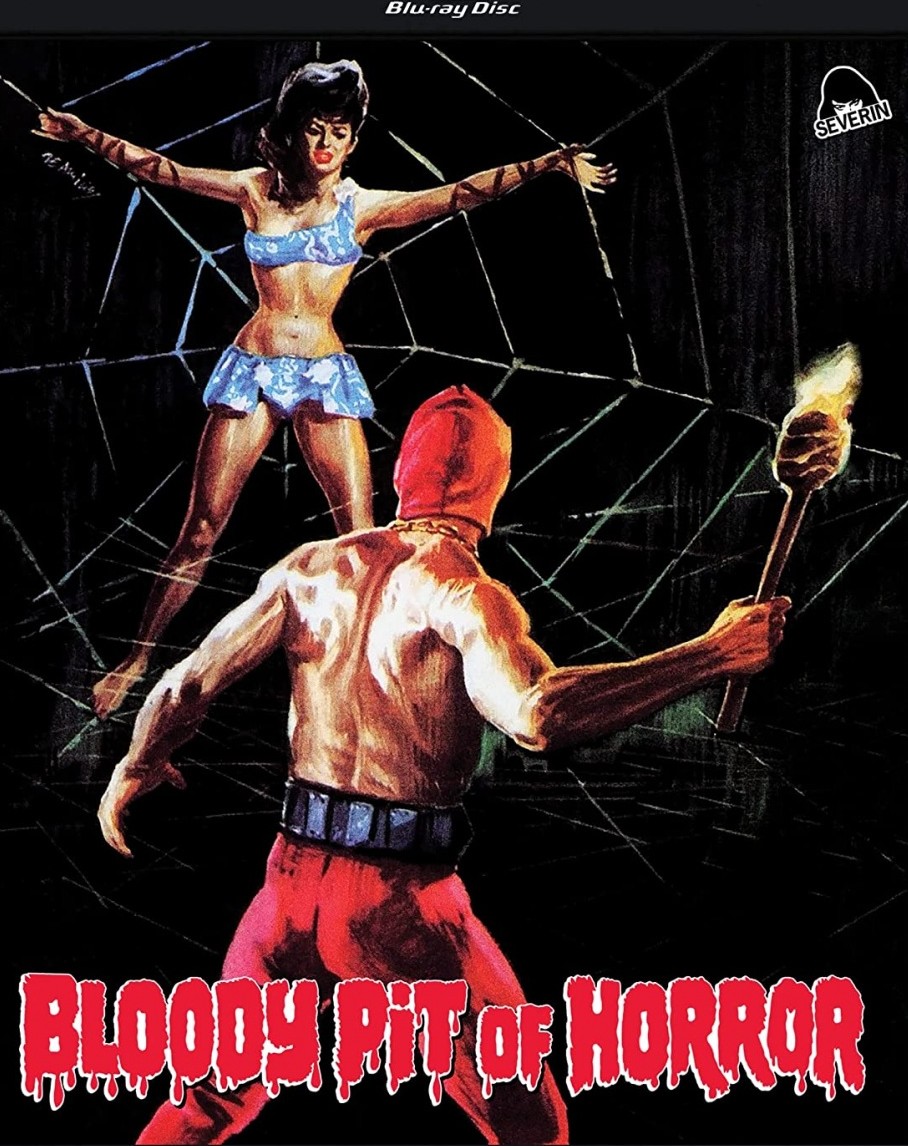
Bloody Pit of Horror / Il boia scarlatto (1965)

Fun is only partially the name of the game with a film like Bloody Pit of Horror. With its comic book style influence, there’s lots of fun to be had, but it’s got a mean side too, as sadism is also the name of the game. The mix of fun and dark in the film is an influence from a style of Italian adult-oriented superhero, crime, and erotic comics known as Fumetti Neri, which consists, among many others, of flamboyant masked super heroes/villains: Diabolik, Kriminal, Mister-X, and Satanik. The antagonist in Bloody Pit of Horror could’ve easily come out of this subgenre, but he’s no fantastic masked superman. He’s a fantastically cruel masked super-sadistic-madman, the Crimson Executioner, played with love, enthusiasm, and high energy by a chiseled Mickey Hargitay.

Thursday, September 8, 2022

Marquis (1989)

Only Marquis’ literature can give me a taste for living.” –Justine (Isabelle Wolfe

Marquis is quite the creation. I never knew of its existence until recently. It’s a little like the movie Quills (2000) but with anthropomorphic characters who look like they’ve escaped from Alice in Wonderland. It is set in 1789, shortly before the Storming of the Bastille, in Paris France. The lead character (Francois Marthouret) is an inmate of the Bastille, who is referred to as Marquis and is a talented writer of erotic, violent, and depraved manuscripts. He is not necessarily alone, for his sizeable member who goes by Colin (Valerie Kling) is his close companion, consultant, and conversationalist. In between writing various pieces of salacious stories, Marquis finds himself participating in a ploy to help free a political prisoner, Lupino (Roger Crouzet), for the sake of the Revolution. Another imprisoned woman, Justine (Isabelle Wolfe), who was raped and impregnated by the king, is eventually thrown into the same cell as the Marquis, as a corrupt priest, Dom Pompero (Vicky Messica), intends to divert the blame on to him and cover up the king’s misdeed, but Justine instead finds the Marquis to be a gentleman and an enthralling storyteller. 

Sunday, June 12, 2022

Blue Eyes of the Broken Doll / Los ojos azules de la muñeca rota (1974)

The sadistic and awesome poster art is certainly deceptive, but the US title House of Psychotic Women isn’t too far off. Perhaps it should be, ‘house of sisters who probably should learn to communicate better’? Can’t say it doesn’t really sell the film though. Oddly enough, I was sold on the movie’s original title Blue Eyes of the Broken Doll, which works for the film as well, so feel free to pick your favorite title for this Spanish thriller, written by and starring Paul Naschy, and directed by Carlos Aured. It was also known as House of Doom for US television. 

Carlos Aured originally knew Paul Naschy from working as assistant director for Leon Klimovsky.* Aured would be hired on to direct Naschy in Horror Rises from the Tomb (1973).* They would collaborate in the ‘70s on three more films, with Naschy starring and Aured directing: Curse of the Devil (1973), Blue Eyes of the Broken Doll, and The Mummy’s Revenge (1975). 

Blue Eyes of the Broken Doll was pivotal in my becoming a Paul Naschy fan. It was my second Paul Naschy film. My initial interest in it being that it looked and sounded like a giallo, and I certainly wanted it for my giallo collection that at the time was just starting to grow beyond Dario Argento and Lucio Fulci. I had also remembered Paul Naschy from a previous film I saw as a teenager, the aforementioned Horror Rises from the Tomb, which at the time disappointed me, so I was feeling slightly dubious. After watching Blue Eyes of the Broken Doll, I had a much better time with it, and I loved Naschy’s character in the film, Gilles, which resulted in my eventually collecting many more Paul Naschy movies and becoming an ardent fan of his. Plus, I would end up realizing a new love and fondness for Horror Rises from the Tomb as well.

Sunday, April 3, 2022

The Devil’s Lover / L’amante del demonio (1972)

Now I have you with me, under my power. Our love grows stronger now with every hour. Look into my eyes, you will see who I am. My name is Lucifer, please take my hand.” – Black Sabbath 

When Satan comes to town, he sets his sights on the biggest catch in The Devil’s Lover, or my personal favorite alternate title Lucifera: Demonlover

I don’t know why, but it’s taken me many years to revisit this Italian gothic horror. The last time I watched it was in 2009 when I picked up the pan-and-scan Mya DVD. Despite the poor picture quality, I was happy to have it, as I probably wouldn’t have ended up knowing about it otherwise, but I am surprised the film never had an upgrade since. As far as I can tell, the only way to see it in 2022 is still as a censored and murky full screen film [Update (December 2023): Severin has released this film on Blu-ray uncut and restored in Volume 2 of their amazing Danza Macabre Italian gothic horror boxsets]

Even though it was restrained, my fondest memory of this film was the grand love scene between a nude Rosalba Neri and a clothed, caped Devil figure, played by Edmund Purdom. I was in awe at the visual of Rosalba’s sideways lying profile figure that was partially shrouded by the devil’s cape as he embraced her. It certainly has the same kind of energy as the classic reclining nude paintings, such as La Grande Odalisque (1814) by Jean-Auguste-Dominique Ingres or The Rokeby Venus (1647-1651) by Diego Velázquez.

Saturday, January 15, 2022

Justine and the Whip (1979)

Around the late ‘70s, Joe D’Amato got his paws on three Jess Franco films and, with editing help from Bruno Mattei, combined separate footage from each film into a single film called Justine and the Whip, starring Lina Romay, with Alice Arno receiving top billing. The dialogue from the original films was changed and redubbed in Italian, and the soundtrack was reworked. 

The reasons for why a patchwork movie like Justine and the Whip exists aren’t clear. Some have said that it was because D’Amato was salvaging an unfinished film from Franco that was originally intended to be another version of De Sade’s Justine. But I read in Stephen Thrower’s The Delirious Cinema of Jesus Franco: Volume Two that the original film was called Julietta 69 and was completed and actually had a 1976 French cinema release before becoming inaccessible.* It’s speculated that Jess Franco sold Julietta 69 to an Italian production company, and D’Amato and Mattei were eventually commissioned by Franco Gaudenzi to make the mashup Justine and the Whip. Thrower also points out that D’Amato claimed in an interview from Joe D'Amato Totally Uncut (1999) that they were trying to make Franco’s films more “usable”,* but the result here is an incoherent mess that seems quite unusable, at least by comparison to what the completed Julietta 69 must have been like. Maybe by “usable” D’Amato meant more commercially appealing for the time by possibly increasing the number and frequency of love scenes in the film.