

Thursday, February 23, 2017
The Devil’s Wedding Night / Il plenilunio delle vergini (1973)


Thursday, January 12, 2017
Manhattan Baby (1982)

With Fulci being synonymous with gore, zombies, and various sorts of gateways to hell, viewer expectations of Manhattan Baby were probably different than what they got, as it abandons the gothic, supernatural zombie film altogether. It was scriptwriter Dardano Sacchetti’s attempt at moving away from what he considered conventional horror, to try and close up the gates of hell and open new gates of time and space. Although there are obvious influences from The Exorcist (1973) and The Awakening (1980) (and surprising similarities to Poltergeist which came out the same year), Sacchetti wanted to create something different, and for the most part he succeeded.
Saturday, December 3, 2016
Something Creeping in the Dark / Qualcosa striscia nel buio (1971)

Saturday, October 8, 2016
S & M: Les Sadiques (2016)

It seems like only yesterday when we were checking out The Devil of Kreuzberg (2015), a respectably accomplished modern gothic horror film directed by Alexander Bakshaev that’s gotten a lot of due praise, and now, seemingly out of nowhere, Alex and the great folks involved follow it up with a killer Jess Franco tribute S & M: Les Sadiques.
I had viewed a lot of compelling images of this film when it was in production, and one of the images, which did not end up in the cut of S & M that I watched, displayed lead actor Nadine Pape channeling an iconic image of late ‘60s, early ‘70s Franco lead Soledad Miranda, and I thought it looked cool. It captured the original spirit but also had a different energy about it that was trying to impart a new vision, something that’s not only a great tribute but also works on a number of other levels, which is something that could also be said about the overall film.
Tuesday, August 23, 2016
Night of 1,000 Sexes / Mil sexos tiene la noche (1984)

When it comes to the large selection of erotic Lina Romay featured Franco titles, it can be difficult to make a selection. You want something that goes beyond just lengthy porn scenes; you want something worth keeping, something that’s erotic but also dark, ethereal, metaphysical, with a dreamy ambiance, emotion, and artistic merit. Well, if you haven’t seen it yet, and you’re looking for a sweet Jess Franco and Lina Romay fix, the film I’m pulling out for you tonight, Night of 1,000 Sexes, will meet your demands.
Thursday, July 14, 2016
Horror Rises from the Tomb (1973)

In the midst of my giallo collecting craze around 2008, I eventually came upon a Naschy thriller called Blue Eyes of the Broken Doll (1974). Needless to say, I dug it and finally became interested in director/writer/actor Paul Naschy. My next Naschy film was Human Beasts (1980), which to me was an even greater experience. Then, after having fun with a couple of Naschy’s werewolf movies, I thought, despite my disconcerting memories of the film, I’d give Horror Rises from the Tomb another go with a new perspective as a Naschy fan and without my zombie film bias.
Saturday, May 28, 2016
Blow Job – un soffio erotico (1980)

The blowjob in Cavallone’s film only makes up a fraction of the movie during the third act and coincides with a mescaline (the main active hallucinogen in peyote) trip, and so the fellatio is also presented indirectly. The mescaline aided “blowjob” sort of doubles as a gateway act to a higher form of perception, but the fascination in this case comes more from how the filmmakers choose to represent “suchness” or “the absolute”, the ultimate nature of reality without reduced awareness. One of our lead characters Stefano (Danilo Micheli) transcends reality, under the guidance of an erotic witch Sibilla (Mirella Venturini), to take a trip through the spirit world, aka tripping balls. It involves dancing and low budget experimental set pieces and was more memorable than I was anticipating it to be.
Sunday, May 8, 2016
Ten Films That Describe My Aesthetic
Terence from Chicks with Candles has tagged me to “list
ten films that describe my aesthetic.” I believe this is a Tumblr game that has
leaked into Blogger in my case. Before me, Terence was tagged by @alfredsnightmare. So what does it mean to say “my aesthetic”? With movies, I
think of it as a familiar visual and emotional theme that still resonates with
me irregardless of how many times I experience it.
But perhaps the included images might speak a little more than words.
1) The Forbidden Photos of a Lady above Suspicion (1973): Colorful liquor bar carts, ‘70s giallo glamor, Euro-nightclubs, Technicolor, small cars, cigarettes, Edda Dell’Orso, Ennio Morricone – So these features could describe a lot of movies, but this one has one of my favorite titles and Nieves Navarro in a black high split open side dress. I thought that Navarro’s proud and confident sexually liberated character Dominique felt like a proto-Samantha from Sex and the City.

2) Succubus (1968): Provocative muses, looming castle destinations, mannequins, inner personality conflicts, nightclub faux torture scenes, dream sequences, trippy acid parties – The hazy soft-focused sequence when Janine Reynaud’s Lorna Green drifts out of bed and ventures to the limestone river castle in Lisbon and the questionable perspective of dream or reality remains a gold standard for surreal film experiences for me. Is she mad, or just not of this world?

3) The Reincarnation of Isabel (1973): Erotic madness, mountainous terrain, spaced out looking actors standing around the Castle Balsorano, Eastmancolor, expressive sadomasochism, comical sex scenes, day and night merging, excessive use of grandiose set pieces – This movie’s a chaotic mess, but it’s also an expressionistic masterpiece that thrives on account of its aesthetic and not its narrative.

4) The Blood Spattered Bride (1972): Ancestral mansions, sapphic vampires, Carmilla influenced, bloody daggers, blurred line between dream and reality, bloody mariticide, gothic candle lit dinner scenes, sylvan settings – Beautiful but disturbing with several uncomfortable parts, The Blood spattered Bride still works as a great Spanish horror film despite being pretty heavy with its tones of misogyny and misandry.

5) The Spider Labyrinth (1988): Conspiracy theory – How can conspiracy theory be an aesthetic? Well, have a look at the included screen grab below. That realization that you were in the lion’s den the entire time makes for a uneasy experience in denouements to films such as The Perfume of the Lady in Black, Short Night of Glass Dolls, and Rosemary’s Baby.

6) Pinocchio and the Emperor of the Night (1987): ‘80s Filmation nostalgia, inappropriately scary for intended kid audience, creepy carnivals – This unofficial sequel to Carlo Collodi’s Pinocchio did give me nightmares, particularly on account of one scene with Pinocchio at The Neon Cabaret, some sort of kid disco (the Playland counterpart), where the kids' faces start to horrifically distort after he drinks the sparkly green liquid, which I like to think is carbonated Ecto Cooler spiked with absinthe.

7) All the Colors of the Dark (1972): Black Masses, Edwige fenech (yes, she counts as an aesthetic), looming mansion destinations, Bruno Nicolai, staying classy and fashionable (like something out of a JCPenny’s catalogue) while being stalked by your killer. I love black mass scenes and All the Colors of the Dark easily has my favorites.

8) The Werewolf vs. the Vampire Woman (1971): Vampires moving through space in slow motion, classic monster mashups, Paul Naschy, gothic ambiance – With the right amount of fog and dread, slow motion framing can make your monsters seem to exist outside of space and time, and the effect is quite startling, so much so that Amando di Ossorio would mimic it for his Blind Dead Templars.

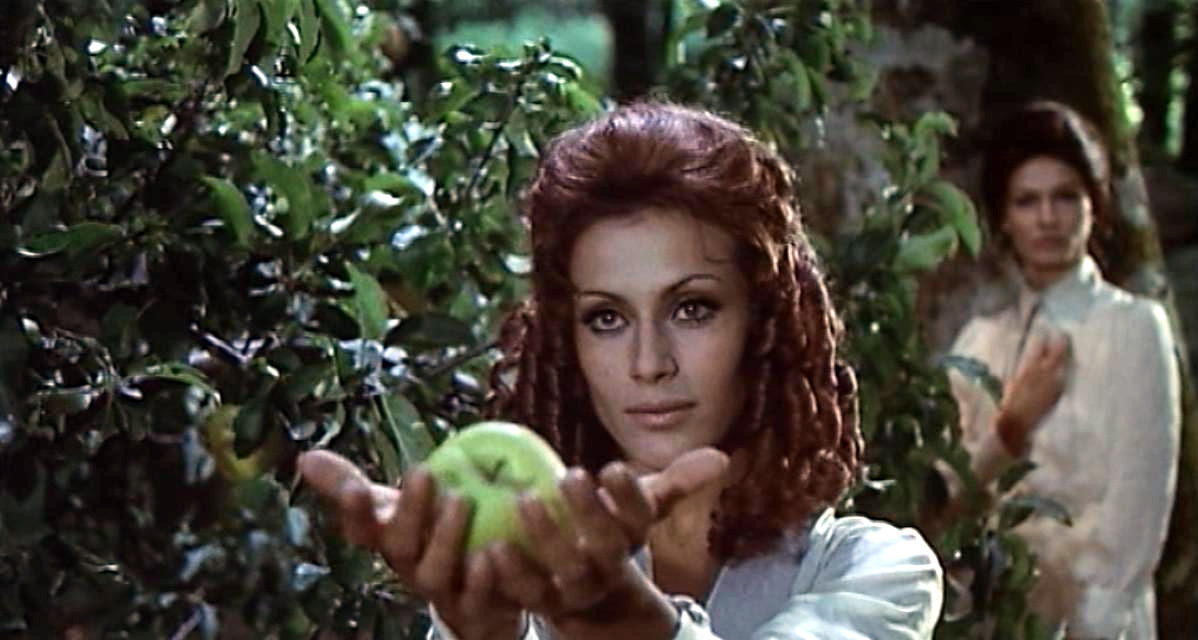
9) Queens of Evil (1970): Horror movies with a fairytale exterior, provocative situations that aren’t what they seem, ancient witches in touch with modern ‘70s fashions, Snow White, free spirited hippies with a lot of crazy ideas about free love – Queens of Evil is a fantastic horror film with a biting social message.

10) Who Framed Roger Rabbit (1988): Classic cel animation juxtaposed with reality, nourish style set in 1940s LA, inappropriate for kids despite being one of my favorite movies as a kid – There couldn’t be anything more awesome than cartoons being real and the existence of a place like Toontown and not to mention a chance to meet Betty Boop.

But perhaps the included images might speak a little more than words.
1) The Forbidden Photos of a Lady above Suspicion (1973): Colorful liquor bar carts, ‘70s giallo glamor, Euro-nightclubs, Technicolor, small cars, cigarettes, Edda Dell’Orso, Ennio Morricone – So these features could describe a lot of movies, but this one has one of my favorite titles and Nieves Navarro in a black high split open side dress. I thought that Navarro’s proud and confident sexually liberated character Dominique felt like a proto-Samantha from Sex and the City.

2) Succubus (1968): Provocative muses, looming castle destinations, mannequins, inner personality conflicts, nightclub faux torture scenes, dream sequences, trippy acid parties – The hazy soft-focused sequence when Janine Reynaud’s Lorna Green drifts out of bed and ventures to the limestone river castle in Lisbon and the questionable perspective of dream or reality remains a gold standard for surreal film experiences for me. Is she mad, or just not of this world?

3) The Reincarnation of Isabel (1973): Erotic madness, mountainous terrain, spaced out looking actors standing around the Castle Balsorano, Eastmancolor, expressive sadomasochism, comical sex scenes, day and night merging, excessive use of grandiose set pieces – This movie’s a chaotic mess, but it’s also an expressionistic masterpiece that thrives on account of its aesthetic and not its narrative.

4) The Blood Spattered Bride (1972): Ancestral mansions, sapphic vampires, Carmilla influenced, bloody daggers, blurred line between dream and reality, bloody mariticide, gothic candle lit dinner scenes, sylvan settings – Beautiful but disturbing with several uncomfortable parts, The Blood spattered Bride still works as a great Spanish horror film despite being pretty heavy with its tones of misogyny and misandry.

5) The Spider Labyrinth (1988): Conspiracy theory – How can conspiracy theory be an aesthetic? Well, have a look at the included screen grab below. That realization that you were in the lion’s den the entire time makes for a uneasy experience in denouements to films such as The Perfume of the Lady in Black, Short Night of Glass Dolls, and Rosemary’s Baby.

6) Pinocchio and the Emperor of the Night (1987): ‘80s Filmation nostalgia, inappropriately scary for intended kid audience, creepy carnivals – This unofficial sequel to Carlo Collodi’s Pinocchio did give me nightmares, particularly on account of one scene with Pinocchio at The Neon Cabaret, some sort of kid disco (the Playland counterpart), where the kids' faces start to horrifically distort after he drinks the sparkly green liquid, which I like to think is carbonated Ecto Cooler spiked with absinthe.

7) All the Colors of the Dark (1972): Black Masses, Edwige fenech (yes, she counts as an aesthetic), looming mansion destinations, Bruno Nicolai, staying classy and fashionable (like something out of a JCPenny’s catalogue) while being stalked by your killer. I love black mass scenes and All the Colors of the Dark easily has my favorites.

8) The Werewolf vs. the Vampire Woman (1971): Vampires moving through space in slow motion, classic monster mashups, Paul Naschy, gothic ambiance – With the right amount of fog and dread, slow motion framing can make your monsters seem to exist outside of space and time, and the effect is quite startling, so much so that Amando di Ossorio would mimic it for his Blind Dead Templars.

9) Queens of Evil (1970): Horror movies with a fairytale exterior, provocative situations that aren’t what they seem, ancient witches in touch with modern ‘70s fashions, Snow White, free spirited hippies with a lot of crazy ideas about free love – Queens of Evil is a fantastic horror film with a biting social message.
10) Who Framed Roger Rabbit (1988): Classic cel animation juxtaposed with reality, nourish style set in 1940s LA, inappropriate for kids despite being one of my favorite movies as a kid – There couldn’t be anything more awesome than cartoons being real and the existence of a place like Toontown and not to mention a chance to meet Betty Boop.

Subscribe to:
Posts (Atom)