Sunday, June 14, 2026

The Witches' Sabbath / La visione del sabba (1988)

Ayy, if you do get that chick, all you ‘gots’ is trouble...” – Greaser Greg 

Marco Bellocchio’s bewitching romance The Witches’ Sabbath is next-level surreal Italian witch horror, especially when it comes to the visuals. For me, it’s one of many descendants or even a culmination of Mario Bava’s Black Sunday (1960), but those well-known sacrificial witch-burning spectacles and inquisition tropes we’ve seen so many times at this point are given a makeover and an interesting alternate take. Familiar themes of reincarnation and romance are intentionally ambiguous, as we’re not really sure if the interactions with the witch are real or the fancy of a romantic dreamer. And if the witch is real, it’s anyone’s guess if she represents a fatal attraction for the mortal lover. These uncertainties still make for an enjoyably mystifying experience that really captivates with some of the best unreal and imaginative visuals that are worth the price alone. The film also has a surreal factor to it that keeps it interesting, with a real ‘80s fantasy feel to it at times. 


Considering the worldwide impact she must’ve made playing the unstable, complicated but highly desirable love interest as the title character in Jean-Jacques Beineix’s successful Betty Blue (1986), it’s no surprise that the producers were interested in casting Béatrice Dalle in this complex witch/romance drama that kind of feels like a supernatural successor to Betty BlueDalle really does feel right for the role. Actually, I think she fits this part to a tee. 


It’s important here to have a stunning lead that can capture the attention of any viewer and have the kind of dark and haunting beauty to make her convincing as a desirable witch, and Dalle has all of this in spades. She really sells the surreal sex scene with her co-star Daniel Ezralow with her expressions. This is a love scene I really feel each time I see it. Dalle also gives an impressive, emotional backstory monologue that lasts over two minutes, detailing the time she encountered Napolean that may or may not be delusional. Everything she is saying seems like lies, but she also comes off as sincere.


The film starts and ends with some impressive pyrotechnics. It had my attention at the very beginning with Beatrice Dalle in the foreground when a sudden fire explosion drops behind her, like a ball of burning witch energy that can’t touch her. The lingering shot of the witch’s melancholic silhouette here against the background fire is a powerful visual that will stay with you. 


Centuries in the past, during an examination of an imprisoned woman (Dalle) accused of being a witch, a man attending the inquisition, Davide (Daniel Ezralow), seems to show pity (or is it fascination?) and falls in love with the accused. Being the only one to really care about her, it’s implied that he saves her and forms an emotional bond with "the witch" that lasts through the centuries.


In the present day, Davide wakes from a dream. He’s a psychiatrist who works in an asylum with women suffering from delusions and mania, which kind of makes him the right man for an upcoming job of evaluating a prisoner who believes she is an immortal witch. He later travels with his wife, Cristina (Corinne Touzet), to an old town to evaluate this woman, Maddalena (Dalle again), imprisoned for attempted murder, who claims to be born in the year 1630. She appears to be the same persecuted witch from Davide’s dream, who he feels hopelessly drawn too.


When Maddalena is first introduced to Davide in the present, we are treated to an insane hallucination, a spiraling visual that had me reeling. I wouldn’t be surprised if this image of Maddalena literally spiraling in front of Davide becomes a widely used GIF someday. I’m baffled every time I see it. (What kind of off-screen spinning contraption was the actress affixed to?) It’s a truly remarkable sequence (one of many) that hypnotizes and creeps me out every time. I absolutely love it.


Just as she was in her past life, Maddalena is still a prisoner today, with it being alluded to that she may not deserve her imprisonment. As her criminal psychiatrist, Davide ends up becoming her advocate, feeling she may need help, not prison, and perhaps that is why he is here for her now, as he was then. Davide may hope he can "save" her and be with her again, but at what cost? 

Maddalena can be thought of as both a potential threat and a source of happiness and love for Davide (a blessing or a curse?). There’s a tenderness between the two. It feels like they belong together, but everything in the universe is making it complicated for them to find that love again. He may have loved her in a previous life, and now their paths have crossed again in unfortunate circumstances. (I love the way she just pops into scenes when he is thinking of her, like she is a ghost.)


What is intriguing is that like the lead I too felt the same level of concern, fascination, and emotional attachment to Maddalena. It’s a familiar depiction of what it’s like to think you are under someone’s spell, and Davide finds himself enamored; every time he stares at her, he looks impressed. The guy is drunk with love. She's imprisoned in both timelines, and he can't stop thinking of her. It's quite surreal when he hallucinates seeing her (15th century edition) locked in a cage, literally outside his top story window, so close but fatally out of reach, and freeing her from it seems impossible.


Davide does happen to be married, but that doesn’t seem to stop the allurement. He even gives “the witch” his wedding ring when she asks for it, an uncontrollable impulse of switching over his fidelity. In a way, by carrying his wedding ring, she carries his love with her. 

Davide’s wife does love him, but her tears suggest that she can feel he is switching on her. Honestly, there’s really nothing wrong with his wife; she (Touzet) looks great, but she ends up coming off as a shunned goddess in favor of “the witch” who has re-entered Davide’s life.


The big showstopper set piece that most will remember this film by happens when Davide appears to find himself at some kind of nexus between past and present (where everyone can get their freak on), and a mass of witchlike peasants accost him. I believe this is the witches’ sabbath the title alludes to. (I want to say they represent a hedonistic world that Maddalena is a part of.) 

Eventually, the wall of witches slowly encroaches upon him, emerging from the fog and lightning, almost as if they are about to attack, but Davide seems to show no fear and is happy to come off just as crazy as them. It kind of reminds me of being in a nightmare, and instead of getting scared or bewildered you decide to play along and have fun in the moment, maybe even try to overpower it; and eventually the nightmare turns playful. By doing this, it’s like he’s allowed himself to enter a society he otherwise wouldn’t really belong to in order to better stay connected with Maddalena and the foreign world she inhabits. Maybe they also represent all of the crazy patients he has to deal with as a psychiatrist.


This part plays out for a while, feeling like interpretive dance. It’s like Ezralow and all the extras and actors involved successfully got in touch with their inner witch. Everyone seems to lose themselves in the moment, and the outcome to the spectacle is marvelously spellbinding, creative, and original. Something about it feels impromptu, where everyone is giving it their all and just running with it. The film kind of enters and exits this part as if it was a dream.


I like the complementary past and present settings in the film. Both feel very authentic. The separation between the timelines seems to become irrelevant after a while, as the past emits an energy that melds with the present. I eventually found myself not concerned if we were in the present, past, or some other realm. That all of the old buildings (I’m mostly talking about the marvelous external view of the buildings of Pitigliano) in the present setting haven’t changed in centuries also contributes to the feeling of being in some kind of timeless realm.


When all is said and done, you can’t help but ask yourself if it’s all just Davide’s fancy, but it’s better to accept that Maddalena is an immortal witch, and it was always Davide’s fate to dance with the witches.  

The Witches’ Sabbath is kind of a dense film that I also found enjoyable watching in segments. It feels like you can attempt to watch it all together or focus in on individual sections to savor and even rewatch to get the most out of the film. I feel it’s an unfairly shunned worthwhile Italian/French horror/drama that too many are oblivious of. Like many others, it doesn’t deserve to be forgotten. 

© At the Mansion of Madness


Friday, March 13, 2026

The Curse of the Vampire / La llamada del vampiro (1972)

José María Elorrieta’s Curse of the Vampire has been one of the harder Spanish vampire films for me to recall for some reason. I’ve watched it every few years since 2012, and every viewing would always feel like the first time. But I’m hoping that by reviewing it, it will finally stick for good. I’ve come to realize that its lengthy and diluted plot is likely to blame, but the lasting effects it does have are mostly thanks to it having some of the best vampire visuals, some of which have recently become my favorites. 

Following the intro/grabber scene, we are hit with a killer opening credits freezeframe visual of a bloody staked vampire, Margaret (Loreta Tovar), with spot-on eerie feminine vocalizing (shrieking) that really sets the tone and hits the spot for me. Despite being staked at the beginning, Margaret continually returns throughout the film to serve and deliver some top-quality lady vampire scenes. The rules here are that if the stake is removed, the vampire is good-as-new. Somehow, drowning in quicksand doesn’t take them out either.

Sunday, December 14, 2025

The Vampire Happening / Gebissen wird nur nachts - das Happening der Vampire (1971)

To have Clarimonde was to have twenty mistresses; ay to possess all women: so mobile, so varied of aspect, so fresh in new charms was she all in herself – a very chameleon of a woman, in sooth.” – Theophile Gautier 

I came across The Vampire Happening originally, about ten years ago, because I was interested in seeing more films made by Aquila Film Enterprises, the same company that produced one of my all-time favorite Jess Franco films Succubus (1968), as well as Adrian Hoven’s Castle of the Creeping Flesh (1968). However, Jess Franco was not involved in The Vampire Happening. This time, I was instead following the co-producer of Succubus Pier A. Caminnecci, who I thought seemed like an interesting guy, based on some of the backstory Jess Franco gave on him during an interview included on the old Blue Underground DVD release of Succubus, which included an interesting anecdote about Franco finding inspiration after coming across what he referred to as the Necronomicon at Caminnecci’s house. During the interview, Franco also said that Caminnecci was “…very rich…” and “…refined but sometimes insufferable because of his pretentious airs.” At the time, Caminnecci seemed surprisingly young for a film producer. He was the wealthy son of Harras Ursus Caminnecci Siemens, and he also co-founded Aquila Film Enterprises with actors and directors Adrian Hoven and Michel Lemoine.  

Caminnecci did seem to like to have cameos and bit parts in the films he co-produced. He makes a brief appearance during the opening to The Vampire Happening in an “adult movie” scene-within-a-scene with his wife Pia Degermark that is being shown to a mixed audience of passengers, with various jokey reactions, on a commercial airplane.

Degermark and Caminnecci married the same year The Vampire Happening came out, and I cannot help thinking that the film was intended as a starring vehicle, or perhaps even a sincere gift, from Caminnecci for Degermark to be elevated and fondly remembered by the world, as she was the beautiful lead and main attraction to the film in a dual role as actress Betty Williams and her undead ancestor Clarimonde.

Thursday, October 2, 2025

Obscene Desire / L'osceno desiderio (1978)

I recently had the pleasure of discovering the hidden gem Obscene Desire for myself, and it could not have been timelier. Just as I was gearing up to review it, after taking several blurry looking screen grabs, I happened to find out that Vinegar Syndrome was releasing it on Blu-ray as part of their Bloodstained Italy three-movie set, which also included The Bloodstained Lawn (1973) and Death Falls Lightly (1972), so I decided to hold off until my pre-order came in. 

For me, the wait for a restoration of Obscene Desire was really short (only a few months after first watching it), in comparison to the whole decade I waited to finally see a restored The Witches Mountain (1973). It is, of course, a much appreciated big improvement over what was available before, and it’s an even greater delight to watch Marisa Mell as the lead, Amanda, in this pretty eclectic Spanish-Italian horror film. Here, she is not playing her typical swindling seductive murderess type (as seen in movies like Marta (1971) and Diary of an Erotic Murderess (1975)) but rather a vulnerable and pregnant newlywed, full of anxiety, who also gets to act the hell out of certain parts. 

Don’t get me wrong, I am a big fan of her swindlers, but I always thought Marisa Mell was underused in horror and fantasy. She played a seductive ghost in Parapsycho – Spektrum der Angst (1975) and had an attractive side role in Ring of Darkness (1979), but I’m still grateful for this consolidation of a murder mystery, psychological thriller, and Exorcist horror film with Marisa Mell at the helm. I also have to point out that during the climax, she does an awesome Gene Simmons impression that makes my night every time I see it.

Saturday, July 19, 2025

Deep Shock (2019)

Deep Shock is another highly awarded short film written and directed by Italian filmmaker Davide Melini that is a return and a celebration of the classic giallo film but with a modern look and feel. It has the added bonus of also being a horror film, with both a giallo and demonic ghost story that seem to run side-by-side but also meet up and interconnect nicely, so if you like a little bit of The Changeling and The Exorcist to go with your Deep Red, there’s a good chance this horror/giallo hybrid might be your cup of tea. At thirty minutes, it far from overstays its welcome. In fact, I felt like watching it again shortly after my first viewing. 

The film was produced in the UK and was shot together with Melini’s other short Lion using the same crew, with Deep Shock taking eight and a half days to shoot. This one has a more expanded cast than the other three short films from Melini I’ve covered, as the story is bigger with themes of grief, trauma, nightmares, mystery, murder, family curses, and religion among others, while also including the beloved black gloved killer whose identity will be revealed when the time is right. 

Just in the opening scene alone, I felt like I noticed homages to three different Argento films, which feels appropriate, before it launches into its own story, starting with a string of nightmare sequences with the film’s lead heroine Sarah (Muireann Bird).

Saturday, July 5, 2025

Lion (2017)

Some of you who have been with me long enough might remember me covering two short horror films, The Puzzle (2008) and The Sweet Hand of the White Rose (2010), from Italian filmmaker Davide Melini (assistant director for Dario Argento’s Mother of Tears (2008), Penny Dreadful and Into the Badlands). These were pretty good and provided me with a new experience in reviewing movies much shorter than I was used to. I also briefly spotlighted Melini’s supernatural horror/giallo hybrid Deep Shock (2019) back when it was still in pre-production. The film was delayed for quite some time but was eventually released in 2019. It has a cool classic and modern feel to it with a brutal bathroom murder scene that is worthy of the giallo style film it is celebrating.  

Davide Melini’s horror short from the UK titled Lion is boasted as being the most awarded horror short film in history. It feels like a runaway award effect is taking place with the film, as it is now up to a staggering 902 awards – which are individually posted on the film’s socials.

Thursday, May 22, 2025

Arcana (1972)

“That’s twentieth-century progress for you; we can put a man on the moon, but we can’t find a few simple ingredients to do a magic trick.” – Captain Manzini  

If magic is real, then it isn’t obvious. It will probably never lend itself to definitive proof but rather reserve itself more for personal interpretation that depends on the hopes, beliefs, and dreams of the individual. Be it paranormal or psychological, magic spells can provide a lot of symbolic meaning, clarity, and guidance for the caster. 

Giulio Questi’s inventive, esoteric, enchanted sorcery of a film, Arcana, is an unforgettable experience that I like to think is a magic spell itself. The effects of that spell really start to hit at about the one hour and fourteen-minute mark (when that hypnotic violin theme kicks in) and we get a peculiar standout segment in the film that is unlike anything else. The film also does a good job at capturing the appeal and mystique of tarot in both the divination reading scenes and in the unfolding of its mystifying plot. 

Monday, February 24, 2025

Diary of an Erotic Murderess / La encadenada (1975)

Let’s keep the femme fatale thrillers rolling with the penultimate movie as director for Spanish filmmaker Manuel Mur Oti, Diary of an Erotic Murderess, starring Marisa Mell in the lead role as a seductive killer con woman. Despite being a true villain in the story, there’s something really likeable about her in this. She’s not a sympathetic villain, although she might try to incite sympathy, and she really isn’t redeemable in any way, but she’s still appealing. Perhaps that’s just a testament to the power of the outward charm and beauty of the femme fatale.

How many of you like to think you can change her? or that she might make a special exception in your case? and maybe you just might survive your romantic but likely deadly sojourn with her, with your fortune and life still intact? It’s a fun idea that I usually have when watching this movie, but it’s not very realistic considering it doesn’t go well for her partners in crime. Joking aside, this one also does get pretty dark. 

It shouldn’t be surprising that Diary of an Erotic Murderess is a treat for fans of Marisa Mell and her Italian and Spanish swindler thrillers like Perversion Story (1969), Marta (1971), The Great Swindle (1971), and Death Will Have Your Eyes (1974). She’s great in it, and it’s just as good as another of my favorites Marta, which has a similar concept but is told quite differently.

Thursday, November 21, 2024

Diabolicamente... Letizia / Sex, Demons and Death (1975)

The oppressed have assimilated their fate so well that they become indignant if we offer them a less repressed sexual future.” – Emmanuelle ArsanMon Emmanuelle, leur pape et mon Eros  

The name Letizia means “joy,” and one can’t help but feel joy when a name like Letizia rolls off the tongue. So, there’s a bitter irony to the title character of Salvatore Bugnatelli’s Diabolicamente… Letizia baring the sweetness of joyful pleasure only to turn out to be quite the devilish killjoy.

Diabolicamente… Letizia (also known as Sex, Demons and Death) is another peculiar erotic Italian horror that kind of stuck with me after only seeing it once about six years ago. There is something off-kilter and ominous about it, with a repressive, isolated autumnal villa setting involving a capricious young woman, Letizia (Franca Gonella- Zelda 1974), moving in and sexually perturbing the idle and seemingly peaceful lifestyles of her Aunt Micaela (Magda Konopka) and Uncle Marcello (Gabriele Tinti). The resulting erotic situations are intentionally built up only to push back and break the spell with some sort of unease, be it emotional confliction, humiliation, mockery, or even a jump scare, brought about by the sexually manipulative Letizia. Is she really some kind of sexual she-wolf demoness or do these characters have some serious hangups?

Tuesday, August 13, 2024

La lunga notte di Veronique / But You Were Dead (1966)

Poster art by Veseta
There are two kinds of taste, the taste for emotions of surprise and the taste for emotions of recognition.” – Henry James 

Even with its familiar look (that darkly romantic title and poster art baiting me in), I could still sense La lunga notte de Veronique was going to be a little bit different than the ‘60s/’70s Italian gothic horrors I’m accustomed to (and still a big fan of). No obvious Poe, Le Fanu, Stoker, Lovecraft, Shelley, or Sade influences. No witches, black masses, zombies, blood countesses, demons, masked killers, sadistic crimson executioners, or satanic love interests, just an effective, tragic ghost romance, without much in the way of ambiguity. 

Currently, it doesn’t seem to have much of a fanbase, but the film is lowkey intriguing. I only just came across it recently, and it is somewhat of a pleasant surprise and a nice addition to the ever-growing collection of underseen Eurocult that will hopefully see a restored release someday. 

Wednesday, May 8, 2024

Shadow of Illusion / Ombre roventi (1970)

“I understand those who want to live against this century, but I fear those who believe they can live outside of it.”Emmanuelle ArsanMon Emmanuelle, leur pape et mon Eros  

Cults erect out of myth. Myth gives rise to cults. Their members become so enamored in myth that they become grossly detached from reality. Yet, they’ll maintain a strong conviction and belief that they are the ones who are really in tune with reality, above all others. And when this happens, people get hurt.

For fans of ‘60s/70s Italian thrillers, it’s the prospect of a deadly hippie cult that gives a film like Shadow of Illusion its primary appeal to genre explorers, and while that promising aspect might bring us here, we end up finding even more to like about it. One of the film’s strong points is that it does integrate Egyptian mythology, particularly The Osiris Myth, into its plot rather nicely, even to the point of provoking further viewer interest.  

Shadow of Illusion is directed by Mario Caiano (Nightmare Castle (1965) and Eye in the Labyrinth (1972)) and is quite the excavation for the Eurocult archeologist. It is indeed an enjoyable but unusual watch that kind of feels at home alongside other paranoid Italian occult thrillers like All the Colors of the Dark (1972), The Cat in Heat (1972), or even The Perfume of the Lady in Black (1974).

Friday, January 26, 2024

The Unnaturals / Schreie in der Nacht (1969)

When poring over the impressively diverse range of genre films from Antonio Margheriti, I realize there’s still a lot more I need to see. I have more blind spots here than I care to admit. I plan on eventually rectifying this issue in good time, maybe starting with some of the derivative sounding ‘80s action/adventure stuff like The Last Blood (1983) or The Ark of the Sun God (1984). I do have a soft spot for retro space movies, so something like Assignment: Outer Space (1960), Margheriti’s first full film as director, would probably make my day. I have been a big fan of Margheriti’s exquisite gothic horror films for quite some time (no surprise there), and I’ve been itching to review one of his least talked about (as far as I can tell) gothic horrors, The Unnaturals / Contronatura

I thought this German / Italian co-production kind of had a classic comic book feel to it (something kind of in the vein of EC’s Crime SuspenStories). It’s also been compared to the krimi thriller, with all the fixings of a crime fueled storyline, only instead of a detective or Scotland Yard, the criminal foil and justice comes in the form of the supernatural beyond. There’s also no denying that the 1920s setting, primarily in a gloomy haunted mansion during a long meditative séance, hosted by none other than Luciano Pigozzi, with a bunch of stranded shady characters seeking shelter on a dark and stormy night is gothic horror as fuck. This is the kind of gathering that I consider a good time.

Sunday, October 29, 2023

Night of the Damned / La notte dei dannati (1971)


“Thank Heaven! The crisis / The danger is past, and the lingering illness, is over at last /, and the fever called “Living” is conquered at last.” Edgar Allan Poe 

Horror films are more traditionally associated with anxiety and sleepless nights. Funny, then, how we tend to look towards horror sometimes to wind down after the day. Now, I love to be scared and shocked just as much as any horror fan, but what about a horror film that can have the opposite effect, one that puts you to sleep through relaxation and comfort? Thanks to the usual languid pace and soothing dark ambiance, a lot of older gothic horror films can serve as a pretty good example of this, such as the gothic literary mashup Night of the Damned. 

Directed by Filippo Walter Ratti and written by Aldo Marcovecchio, Night of the Damned is a quaint little ‘70s Italian gothic horror that hits a lot of the right notes when it comes to style, mood, and atmosphere. Sure, there is better to pick from, but something about this film made me want to revisit and connect with it on a deeper level. The Poe-inspired world is worth getting lost in, and it appeals to my love for the supernatural femme fatales who reign from their remote dark castles, with the occult and hedonistic rituals that usually accompany them.

Sunday, July 30, 2023

Death Falls Lightly / La morte scende leggera (1972)


When analyzed with any degree of honesty, jealous behavior appears, in reality, neither as a duty nor a right, but as a shabby dross of our obsession with possessing.” – Emmanuelle ArsanL’hypothese d’Eros 

A weekend getaway at a resort hotel with your significant other is most people’s idea of a relaxing holiday, but having to hide out in a creepy, possibly haunted hotel with your mistress for the weekend, because your wife turned up murdered, sounds like a more interesting time to me. 

Death Falls Lightly is one of two thrillers directed and co-written by Leopoldo Savona (the other being Byleth – The Demon of Incest (1972)) that I commend for its unusual and multidirectional approach. You’re not really sure what they’re going for, but you kind of like it anyways. Like Byleth, it’s a little hard to compare to other films of its ilk, since it’s kind of an oddball example. It reaches for different ideas, perhaps one too many, while maintaining that appealing ’70s Euro-genre ascetic, so you’re getting something both different and familiar at the same time. Whether or not it’s actually any good is somewhat difficult to tell by the film’s end. 

I personally find this one delightful, as it is a bit of a jack-of-all-trades genre movie that borrows from crime, mystery, giallo, erotic, fantastical, psychological, and occult horror, so it’s like there’s a little bit of something for everyone. It is mostly centered around a claustrophobic and somewhat dark and depressing hotel. Interestingly, this movie predicts The Shining during a few moments, and my mind even thought a little of Silent Hill at times.

Sunday, April 30, 2023

The Witches Mountain / El monte de las brujas (1973)

Cover art by Justin Coffee

 “A woman will sometimes forgive the man who tries to seduce her, but never the man who misses an opportunity when offered.” – Charles Maurice de Talleyrand

I’m hoping that in the coming months and years, more and more people discover, and hopefully enjoy, the unfairly banned and relatively forgotten Spanish horror Raúl Artigot’s The Witches Mountain thanks to Mondo Macabro’s recent release of the film. Lured by its title and because Patty Shepard was in it, I first saw the film as a VHS rip on YouTube back around 2013 and was really floored by how atmospheric and beautifully haunting it was despite the low picture quality. I’m usually easy to please in this area, but every DVD-R and download of this film I came across was quite soft looking and really showed the film’s age. Anytime I thought to review it, I was discouraged, and mildly depressed, by how much the poor-quality screengrabs undersold the film, so I kept holding out for a decent release someday. Years went by, and I personally started to give up hope, so it was miraculous news for me when the HD upgrade of The Witches Mountain was finally announced. There was a significant delay after the Halloween presale, but I thought it was worth the wait.

Thursday, March 2, 2023

Zelda (1974)

“You came to watch this movie just to see two naked women… You have a colonialist mentality.” – Alberto Cavallone on the ending to Le salamandre*  

“I would like, as I said, for the lover’s place to be in the middle of the couple.” – Emmanuelle Arsan**    

Alberto Cavallone’s films are not fun. I can’t think of one I’ve seen that does not have a depressing ending. Whether or not they are entertaining might depend on the viewer’s mindset, but they are almost always enthralling in a way. You might think you’re being lured in for an erotically fun time, with films like Le salamandre (1969) and Blow Job (1980), or a film with a notorious reputation that precedes it like Blue Movie (1978), but that’s just to get you in front of the screen so the film can put a mirror in front of you, whether or not you realize it, and call you a colonizer or a degenerate (who Cavallone referred to as the “raincoat crowd”), crudely interrupting your titillation. Basically, if the film upsets or antagonizes you, then it was made for you. What’s fascinating is that the films nevertheless did well with the audiences Cavallone was hoping to annoy.  

Cavallone dismissed his own erotic thriller Zelda as a commercial effort, lacking the sociopolitical content of his previous films. On the surface, the movie does have an erotic pull to it, with the promise of interracial lesbian scenes, in a manner similar to Le salamandre. Like Le salamandre, the erotic pull ends up not being the main point of the movie, and with Zelda, Cavallone is critical, or at least dreadfully pessimistic, of the loose sex lives of married couples and the en vogue erotic film of the era while also making his film look very much like one.

Sunday, December 4, 2022

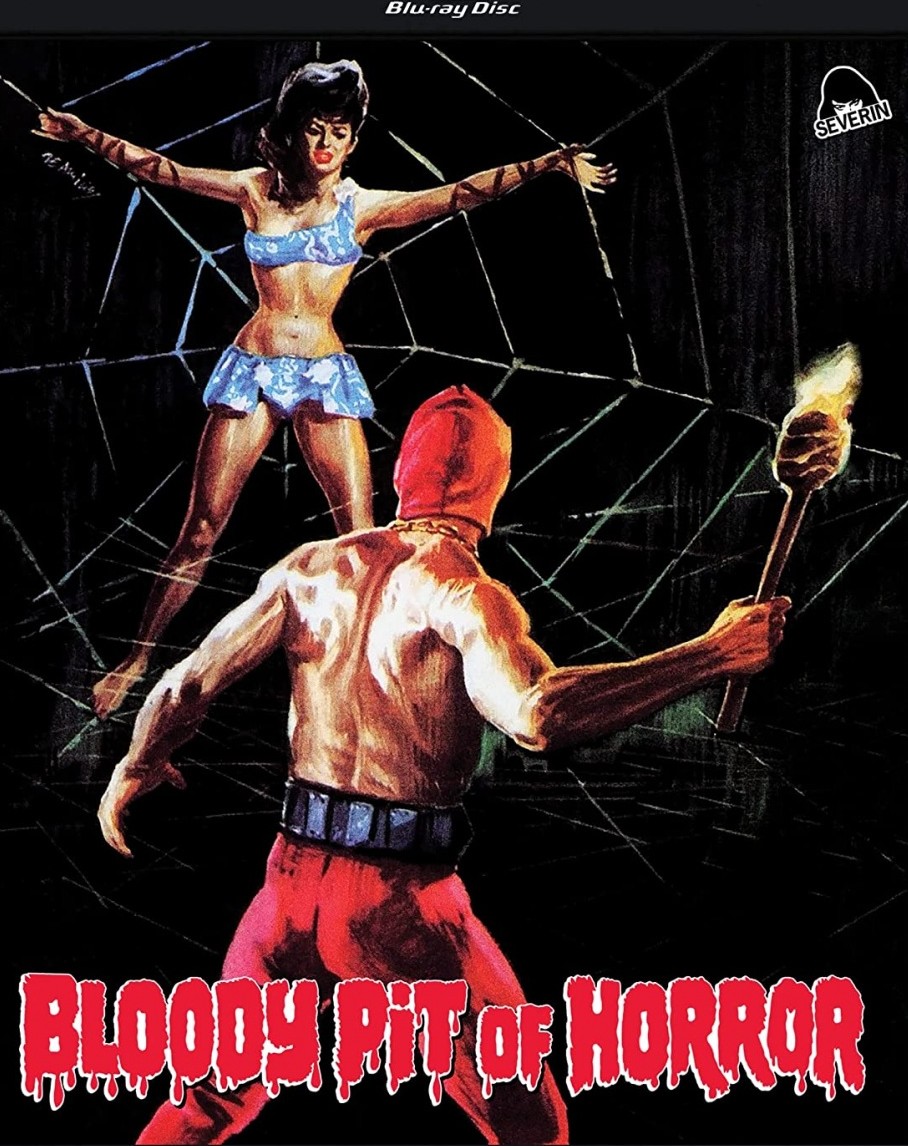
Bloody Pit of Horror / Il boia scarlatto (1965)

Fun is only partially the name of the game with a film like Bloody Pit of Horror. With its comic book style influence, there’s lots of fun to be had, but it’s got a mean side too, as sadism is also the name of the game. The mix of fun and dark in the film is an influence from a style of Italian adult-oriented superhero, crime, and erotic comics known as Fumetti Neri, which consists, among many others, of flamboyant masked super heroes/villains: Diabolik, Kriminal, Mister-X, and Satanik. The antagonist in Bloody Pit of Horror could’ve easily come out of this subgenre, but he’s no fantastic masked superman. He’s a fantastically cruel masked super-sadistic-madman, the Crimson Executioner, played with love, enthusiasm, and high energy by a chiseled Mickey Hargitay.

Thursday, September 8, 2022

Marquis (1989)

Only Marquis’ literature can give me a taste for living.” –Justine (Isabelle Wolfe

Marquis is quite the creation. I never knew of its existence until recently. It’s a little like the movie Quills (2000) but with anthropomorphic characters who look like they’ve escaped from Alice in Wonderland. It is set in 1789, shortly before the Storming of the Bastille, in Paris France. The lead character (Francois Marthouret) is an inmate of the Bastille, who is referred to as Marquis and is a talented writer of erotic, violent, and depraved manuscripts. He is not necessarily alone, for his sizeable member who goes by Colin (Valerie Kling) is his close companion, consultant, and conversationalist. In between writing various pieces of salacious stories, Marquis finds himself participating in a ploy to help free a political prisoner, Lupino (Roger Crouzet), for the sake of the Revolution. Another imprisoned woman, Justine (Isabelle Wolfe), who was raped and impregnated by the king, is eventually thrown into the same cell as the Marquis, as a corrupt priest, Dom Pompero (Vicky Messica), intends to divert the blame on to him and cover up the king’s misdeed, but Justine instead finds the Marquis to be a gentleman and an enthralling storyteller. 

Sunday, June 12, 2022

Blue Eyes of the Broken Doll / Los ojos azules de la muñeca rota (1974)

The sadistic and awesome poster art is certainly deceptive, but the US title House of Psychotic Women isn’t too far off. Perhaps it should be, ‘house of sisters who probably should learn to communicate better’? Can’t say it doesn’t really sell the film though. Oddly enough, I was sold on the movie’s original title Blue Eyes of the Broken Doll, which works for the film as well, so feel free to pick your favorite title for this Spanish thriller, written by and starring Paul Naschy, and directed by Carlos Aured. It was also known as House of Doom for US television. 

Carlos Aured originally knew Paul Naschy from working as assistant director for Leon Klimovsky.* Aured would be hired on to direct Naschy in Horror Rises from the Tomb (1973).* They would collaborate in the ‘70s on three more films, with Naschy starring and Aured directing: Curse of the Devil (1973), Blue Eyes of the Broken Doll, and The Mummy’s Revenge (1975). 

Blue Eyes of the Broken Doll was pivotal in my becoming a Paul Naschy fan. It was my second Paul Naschy film. My initial interest in it being that it looked and sounded like a giallo, and I certainly wanted it for my giallo collection that at the time was just starting to grow beyond Dario Argento and Lucio Fulci. I had also remembered Paul Naschy from a previous film I saw as a teenager, the aforementioned Horror Rises from the Tomb, which at the time disappointed me, so I was feeling slightly dubious. After watching Blue Eyes of the Broken Doll, I had a much better time with it, and I loved Naschy’s character in the film, Gilles, which resulted in my eventually collecting many more Paul Naschy movies and becoming an ardent fan of his. Plus, I would end up realizing a new love and fondness for Horror Rises from the Tomb as well.

Sunday, April 3, 2022

The Devil’s Lover / L’amante del demonio (1972)

Now I have you with me, under my power. Our love grows stronger now with every hour. Look into my eyes, you will see who I am. My name is Lucifer, please take my hand.” – Black Sabbath 

When Satan comes to town, he sets his sights on the biggest catch in The Devil’s Lover, or my personal favorite alternate title Lucifera: Demonlover

I don’t know why, but it’s taken me many years to revisit this Italian gothic horror. The last time I watched it was in 2009 when I picked up the pan-and-scan Mya DVD. Despite the poor picture quality, I was happy to have it, as I probably wouldn’t have ended up knowing about it otherwise, but I am surprised the film never had an upgrade since. As far as I can tell, the only way to see it in 2022 is still as a censored and murky full screen film [Update (December 2023): Severin has released this film on Blu-ray uncut and restored in Volume 2 of their amazing Danza Macabre Italian gothic horror boxsets]

Even though it was restrained, my fondest memory of this film was the grand love scene between a nude Rosalba Neri and a clothed, caped Devil figure, played by Edmund Purdom. I was in awe at the visual of Rosalba’s sideways lying profile figure that was partially shrouded by the devil’s cape as he embraced her. It certainly has the same kind of energy as the classic reclining nude paintings, such as La Grande Odalisque (1814) by Jean-Auguste-Dominique Ingres or The Rokeby Venus (1647-1651) by Diego Velázquez.